Saisaketh Javvaji, D.O., Sleep Medicine Physician Every spring, we look forward to the days getting longer. In exchange, we lose an hour of sleep when the clocks ‘spring ahead’ every March, which often leaves people worried about the effect it will have on their sleep.
The beginning of daylight saving time can bring about a sense of dread. After all, the transition results in more than just a lost hour of sleep each spring. It causes a shift in our circadian rhythm, the 24-hour cycle that regulates our body’s sleep, appetite, and mood.
One study found that people get 40 minutes less sleep the Monday after ‘springing forward’. This “Sleepy Monday” describes the phenomenon of increased fatal car accidents, hospitalizations for conditions like heart attacks or atrial fibrillation, and a general sense of grogginess that people may experience. The misalignment of our circadian rhythm may also lead to accumulated sleep debt while our bodies adjust to the new normal.
Even though most people adjust quickly to the change, others may experience chronic sleep loss. If left untreated, this can cause increased blood pressure and heart disease, weight gain, decreased immune function, and the development of psychiatric disorders like depression and anxiety.
Tips for a smooth transition into daylight saving time
Adjust your schedule the week before. For a few days leading up to daylight saving time, wake up 15 to 20 minutes earlier than you normally would.
Seek out light upon waking. Exposing your eyes to sunlight can help retrain your circadian rhythm and consider getting outside for moderate exercise upon waking.
Get a good night’s rest before the change. Anticipate the change by sticking to your normal bedtime and wind-down routines the Saturday before.
Avoid caffeine or alcohol before bedtime. Consuming alcoholic or caffeinated beverages can disrupt your sleep and decrease the quality of your sleep.
Consider a nap. If you feel groggy in the days following daylight saving time beginning, take a short nap (20 minutes or less). Do not nap close to bedtime.
For most people, daylight saving time should only temporarily disrupt their sleep. However, people experiencing symptoms of sleep disorders — daytime sleepiness, difficulty falling asleep, restlessness when trying to sleep, or atypical breathing while sleeping — should talk with their primary care provider or a sleep medicine specialist about getting relief. These symptoms often will be present before the time change and persist for weeks to months beyond daylight saving time. Saisaketh Javvaji, D.O., is a sleep medicine specialist with UPMC Sleep Medicine. Find a UPMC Sleep Medicine provider near you.
When you think of innovative advancements in nuclear power technology, places like the Idaho National Laboratory and the Massachusetts Institute of Technology probably come to mind. But today, some very exciting nuclear power development work is being done in West Texas, specifically, at Abilene Christian University (ACU). That’s where Natura Resources is working to construct a molten salt–cooled, liquid-fueled reactor (MSR).
“We are in the process of building, most likely, the country’s first advanced nuclear reactor,” Doug Robison, founder and CEO of Natura Resources, said as a guest on The POWER Podcast.
Natura has taken an iterative, milestone-based approach to advanced reactor development and deployment, focused on efficiency and performance. This started in 2020 when the company brought together ACU’s NEXT Lab with Texas A&M University; the University of Texas, Austin; and the Georgia Institute of Technology to form the Natura Resources Research Alliance. In only four years, Natura and its partners developed a unique nuclear power system and successfully licensed the design. The U.S. Nuclear Regulatory Commission (NRC) issued a construction permit for deployment of the system at ACU last September.
Called the MSR-1, ACU’s unit will be a 1-MWth molten salt research reactor (MSRR). It is expected to provide valuable operational data to support Natura’s 100-MWe systems. It will also serve as a “world-class research tool” to train advanced reactor operators and educate students, the company said.
Advantages of MSR Technology
The technology is not new. It was actually proven decades ago. “A molten salt reactor was built at Oak Ridge in the 1960s—the Molten Salt Reactor Experiment or the MSRE—and that reactor functioned for about five years, then was shelved in favor of solid-fuel or light-water reactors [LWRs] that we’re all familiar with,” Robison explained. “That was really a decision made because the customer in the 1960s was the Department of Defense, and Admiral Rickover was building a nuclear Navy, and they needed to enrich uranium to plutonium for warheads, and solid fuel reactors are more suited for those purposes,” Robison added.
The coolant is one of the main differences between LWRs and MSRs. As the names imply, an LWR is cooled by water, while an MSR is cooled by molten salt.
LWRs require thick pressure vessels and high-pressure piping to safely contain pressurized water, provide radiation shielding, and ensure long-term structural integrity. Today, there are no U.S. manufacturers with the capability to forge a large nuclear reactor vessel, so they must be sourced overseas.
Notably, molten salt turns from a solid to a liquid at about 450C, but it doesn’t turn to a gas until about 1,400C, which is above the melting point of stainless steel. “What that means is you can never get to the point to where the salt flashes to a steam, so we operate at very, very high temperatures, which is a big advantage because the high process heat—from an efficiency standpoint and manufacturing standpoint—is incredibly valuable, but we operate at atmospheric pressure, because the salt never transfers into a gas. It goes from a solid to a liquid. And, if you were to have some kind of leak or release, once you drop below 450 degrees C, it immediately freezes back into a solid, so kind of picture candle wax, if you will. So, it’s called ‘walk-away safe’ for that reason. You don’t need a containment dome,” explained Robison.
These factors significantly reduce the cost of MSR facilities compared to LWR plants. MSR reactor vessels, for example, can be manufactured by Teledyne Brown Engineering in Huntsville, Alabama, and perhaps elsewhere in the U.S. Robison said everything needed to construct an MSR can be made in America, and he expects much of it to be manufactured in Texas. “Governor Abbott has said, ‘We want Texas to capture this industry,’ ” noted Robison. “Houston, Texas refers to itself as the energy capital of the world. So, we’ve been working with the Greater Houston Partnership and the Houston Energy Transition Initiative [to answer the question] ‘How does that manufacturing happen not just in the U.S., but how does it happen in Texas?’ ”
Liquid fuel also provides an advantage for MSRs versus the LWR’s solid-fuel design. “[In] the solid-fueled reactor, you have the fuel inside the fuel rod. And under current technology, when you burn 3% to 5% of the fuel, then at that point, the rod begins to decay. That is your first level of containment, so you have to pull the rod. That now becomes ‘spent nuclear fuel’ and enters into the waste stream. You still have 95% to 97% of perfectly good fuel inside that fuel rod. And now the problem becomes: ‘What do we do with this nuclear waste that’s going to be around for 100,000 years?’ ”
In an MSR, the fuel is dissolved in the salt. “What that means is we burn practically 100% of the fuel. We do not throw unspent nuclear fuel away, and so our efficiency goes way up. We do not generate the waste that you see with a light-water reactor,” said Robison. “In fact, molten salt reactors can utilize current stockpiles of spent nuclear fuel that is sitting in storage at different nuclear reactors around the nation, and we can take that fuel, and re-utilize that as fuel for a molten salt reactor.”
Commercial Projects Announced
Natura is not only focused on its ACU project, but it is also moving forward on commercial reactor projects. In February, the company announced the deployment of two advanced nuclear projects, which are also in Texas. These deployments, located in the Permian Basin and at Texas A&M University’s RELLIS Campus, represent significant strides in addressing energy and water needs in the state.
“Our first was a deployment of a Natura commercial reactor in the Permian Basin, which is where I spent my career. We’re partnering with a Texas produced-water consortium that was created by the legislature in 2021,” said Robison.
“Produced water” is the water brought to the surface during oil and gas extraction processes. It is a byproduct of hydrocarbon production and typically consists of formation water that was originally present in the underground reservoir, along with additional water introduced during extraction operations. It typically has a salinity that is three times that of seawater, but it can be double or triple that in some instances. In any case, it cannot be released on the surface and must currently be reinjected back into the formation, which can create additional problems.
One of the things that can be done with the high process heat from an MSR is desalinization. “So, we’re going to be desalinating produced water and providing power—clean power—to the oil and gas industry for their operations in the Permian Basin,” said Robison.
Meanwhile, at Texas A&M’s RELLIS Campus, which is located about eight miles northwest of the university’s main campus in College Station, Texas, a Natura MSR-100 reactor will be deployed. The initiative is part of a broader project known as “The Energy Proving Ground,” which involves multiple nuclear reactor companies. The project aims to bring commercial-ready small modular reactors (SMRs) to the site, providing a reliable source of clean energy for the Electric Reliability Council of Texas (ERCOT).
Robison believes the Stargate Project, a massive $500 billion initiative aimed at building advanced hyperscale data centers across the U.S. to power next-generation artificial intelligence (AI) models, could also present an opportunity for Natura. “The very first deployment of Stargate is scheduled to be in Abilene, Texas. We can actually see the data center that’s being constructed from the windows of our offices,” he said. “We may see something happen there just given the proximity of what they’re doing and what we’re doing,” Robison envisaged.
To hear the full interview with Robison, which contains more about the creation of Natura Resources, the selection of MSR technology for its design, its collaboration with ACU, the work done to license the reactor, and much more, listen to The POWER Podcast. Click on the SoundCloud player below to listen in your browser now or use the following links to reach the show page on your favorite podcast platform:
For more power podcasts, visit The POWER Podcast archives.
—Aaron Larson is POWER’s executive editor (@AaronL_Power, @POWERmagazine).
InsuranceDekho, the domestic insurtech firm, has now secured $70mn in a new funding round. The round was led by Beams Fintech Fund, an investor known for backing fintech and digital financial services companies, and also saw participation from MUFG and BNP Paribas Cardif, two global financial institutions that have been increasingly investing in the domestic digital economy.
BNP Paribas Cardif contributed through its insurtech fund, managed by the European investment firm Eurazeo, marking its second investment this year. The proceeds from the latest round of funding are expected to boost its expansion efforts, especially into underserved regions where insurance penetration remains low. This will, in turn, bring insurance services to a larger segment of the population, particularly in tier-2 and tier-3 cities. Funds will also be dedicated to boosting the firm’s tech infrastructure, as well as expanding its expand its product portfolio to cater to a wider range of customer needs.
“We have been strong believers of InsuranceDekho’s vision since our initial investment. Their phenomenal growth, robust distribution network, and relentless focus on technology-driven accessibility make them a clear industry force. We have strong conviction in Ankit and the entire InsuranceDekho management team,” Sagar Agarwal, founder and Partner at Beams Fintech Fund, commented on the development.
Founded in 2017, InsuranceDekho has emerged as a key player in India’s insurtech industry, offering a platform that is said to simplify insurance buying and claims processing. The company, established by Ankit Agrawal, has focused on leveraging AI to make insurance more accessible and transparent for Indian consumers, ensuring that user can compare insurance policies from a variety of companies. Today, the startup provides insurance solutions across multiple segments – motor, health, life, and corporate – and has served more than 10.2 million customers across the country. The platform reportedly issues an average of 21 policies per minute, highlighting the efficiency of its digital infrastructure. Additionally, the company has developed a strong network of 220,000 partners, enabling it to distribute over 720 insurance products. It has also established partnerships with 49 insurance companies.
The financials are in its favor – the startup demonstrated strong financial growth over the past year, achieving profitability in the 2024 fiscal year. The company reported a Profit After Tax (PAT) of ₹86 crore, a significant turnaround from the previous fiscal year’s loss of ₹51 crore. Additionally, its operating revenues saw substantial growth, surging to ₹743 crore in the last financial year, marking a 7.7-fold increase from the previous year’s ₹96.5 crore.
Sixteen amateur acts give it their all Tuesday at the 18th annual Morristown Onstage competition.
Four emerged on the Mayo Performing Arts Center stage as winners:
Age 19 & Over ($1,000):
Soul Tap, a duo who met at a karaoke night, took top honors in the adult division. Pastry chef Michelle “Smilez” Njoku handled vocals and Jonny Scalabrini, an MPAC stagehand, played electric guitar on Love Song. It’s by the Cure, but they covered the Adele cover.
SOUL TAP: Jonny Scalabrini and Michelle Njoku, Morristown Onstage 2025. Photo by Kevin Coughlin
“As a performer myself, I could just see she really brought herself to that performance. That was a lived-in performance, a life lived,” said Ladonna Burns, a New York-based singer and actress who served on the judging panel.
“They both gave an effortless performance.”
Fellow panelist Gabriela Jileva, owner and director of Fred Astaire Dance Studios in Morristown, concurrred.
“They made me feel something, listening and watching them. I think, literally, the performance was from their soul, right?” Jileva said.
Scalabrini has earmarked his winnings for a Costa Rica trip. Njoku, a Newark resident who works in Morristown’s Kirschenbaum Bakery, plans to pay some bills.
Age 18 & Under ($1,000):
The Walsh Memorial Bell Choir of the Presbyterian Church of Morris Plains dazzled the judges with a flawless, sparkling rendition of Toccata on King’s Weston.
The Walsh Memorial Bell Choir in action, Morristown Onstage 2025. Photo by Kevin Coughlin
“They just had this aura of happiness and joy that they brought from them,” said panelist Tom Sellwood, owner and director of the Sellwood Studio of Performing Arts conservatory.
Walsh Choir members range in age from 12 to 17. Rather than split the winnings 11 ways, Choir Director Amy Bozza said the money will go into the ensemble’s summer travel fund.
Asked if she was eligible for the 18-and-under category, the Morristown High School teacher deadpanned: “Of course! I get that question all the time!”
The Walsh Memorial Bell Choir learns it’s won at Morristown Onstage 2025. Photo by Kevin Coughlin
Audience Choice ($500):
Jamie Pooler, a receptionist at Morristown High School, made her second appearance in Morristown Onstage count. Her heartfelt vocals on The Goodness of God won over the crowd.
“We love you, Mrs. Pooler,” chorused a group of MHS students from the audience.
AUDIENCE FAVE: Jamie Pooler, Morristown Onstage 2025. Photo by Kevin Coughlin
“I love you all, too,” she called back with a wave.
Although she now is a star, Pooler is not going to demand a fancy office at the school.
“I like being out among the kids. That’s who showed up for me tonight,” Pooler said with a laugh.
Before she could answer a question about her plans for the prize money, her husband Michael interjected: “She’s going to give it to her husband!”
“Yes, I’m going to give it to my husband,” she said, with an exaggerated wink and a smile.
Hubby may have to wait in line for his cut. Pooler was accompanied expertly by pianist Ken Brown, a friend from Calvary Baptist Church.
Winner Jamie Pooler kisses fellow winner Haniyah Hill, Morristown Onstage 2025. Photo by David Okada
Rossoff Rising Star Award ($250):
Haniyah Hill sings her way to a prize, with help from her dad, Rex, on piano. Morristown Onstage 2025. Photo by Beth Carol
Also marking her second time as a finalist, Haniyah Hill made an impression with her confident interpretation I’m Here from The Color Purple.
The 7th grader was backed on piano by her dad, Rex Hill, a former Morristown Onstage finalist.
“She’s come a long way, and we look forward to seeing how bright her future will be. She’s amazing,” said MPAC President Allison Larena, also a judge for show.
“She has a lot of promise,” added Burns. “Over time, she’s just going to get better and better.”
‘EVERY SINGLE ONE OF THEM COULD HAVE WON’
From start to finish, the caliber of the performances was exceptional. There was an amazing 10-year-old tap dancer (Alexa White), a 13-year-old who sounded like he’s already on Broadway (Miles Schmidt), and an opera diva who was stunning (Franchesca Henry).
THE JURY: Tom Sellwood, Gabriela Jileva, Alllison Larena and Ladonna Burns, Morristown Onstage 2025. Photo by Kevin Coughlin
A Madison High student gave Frank Sinatra a run for his money (Steven Ricciardelli), and a Starbucks barrista (Evan Nuzzi ) sang and banged an original tune that had “hit” written all over it. Another original composition fueled a swirling dance piece (Dreamality Kidz Choir).
There were singing twins (the Milsom Twins), a group that transported listeners to the Andes (Integracion America), and a young woman who rebounded from vocal cord problems to soar (Melissa Valeroso).
Alexa White, Morristown Onstage 2025. Photo by Marion Filler
Lily Bauman’s petite frame delivered an astonishingly powerful sound. Broadway numbers got lively interpretations from a pair of pairs (Georgina Lopez & Charlie Valdez, and Sky Monroe & Zach Mazouat.)
“Every single one of them could have won, depending on what you liked best. It really was a tough one,” said Sellwood.
An honorable mention should have gone to 7th grader Leyton Beba, who co-hosted with Tara Bernie, a TV pro and veteran of 11 Morristown Onstage shows. Beba bubbled with enthusiasm, and was quick on his feet.
Co-emcees Leyton Beba and Tara Bernie, Morristown Onstage 2025. Photo by Kevin Coughlin
Bantering onstage about the show’s fundraising goals, Bernie asked Beba what a dollar will buy these days.
“An education?” he responded, without missing a beat. If Conan O’Brien is busy next year, maybe the Oscars should take a shot on this kid.
“Oh my God, he’s so darned cute,” Larena said.
The evening included bonus entertainment from the Morristown High School Spectrum Jazz Ensemble — Morristown Onstage winners in 2022 — and from the school’s drama department.
Morristown High previews it production of ‘Les Misérables,’ Morristown Onstage 2025. Photo by Kevin Coughlin
The cast gave a rousing performance of One Day More from Les Misérables, the musical coming to MHS on March 21.
Atlantic Health, the biggest sponsor of Morristown Onstage, also plugged its Morristown Medical Center expansion plans, a touchy subject with the hospital’s neighbors.
Created by the Morris Educational Foundation (MEF), Morristown Onstage has raised more than $1.6 million for programs in the Morris School District.
A full house at MPAC for Morristown Onstage 2025. Photo by Kevin Coughlin
The 1,300-seat theater was sold out Tuesday, with tickets priced from $43 to $95. On top of those proceeds, the MEF raised another $42,105 via texts and an anonymous matching grant during the show.
The yearly contest is open to amateur performers who live, work or attend schools in Morristown, Morris Township and Morris Plains, and to alumni of Morristown High School.
MORE COVERAGE OF MORRISTOWN ONSTAGE 2025
Marion Filler, Beth Carroll and David Okada contributed to this story.
The Walsh Memorial Bell Choir, winners at Morristown Onstage 2025. Photo by David Okada
— With cases of measles being reported across the country, Meritus Health is providing answers to frequently asked questions related to the illness.
Within the past few weeks, measles infections have been found in southeast Pennsylvania and northeast New Jersey. That’s in addition to the late-January outbreak in west Texas and New Mexico. More than 150 people have measles in that outbreak, and one child in Texas has died.
“Measles is highly contagious, sometimes it’s fatal and it can cause long-term health defects,” said Anand Budi, M.D., chief medical officer at Meritus and a pediatrician by training.
What are the symptoms of measles, and what are the health effects?
Symptoms start with a high fever (spiking to more than 104 degrees); cough; runny nose; and red, watery eyes.
Within two to three days, tiny white spots may appear in the mouth. Within three to five days, flat red spots start to appear on the face at the hairline, then spread down to the rest of the body.
Measles can also lead to ear infections and diarrhea. In severe cases, it can lead to hospitalization, pneumonia, brain swelling and death.
Is there a measles vaccine?
A highly effective vaccine — known as MMR because it treats measles, mumps and rubella — was developed in the middle of the last century.
Thanks to the vaccine, health officials declared measles eradicated in 2000 in the United States.
However, some people who are immunocompromised aren’t able to receive the measles vaccine. Others don’t get the vaccine for religious or personal reasons. And some children are limited by age, but can still be infected.
To ensure these people’s protection against the illness, it is vital that those who can be vaccinated are.
“The vaccination is extremely safe,” Dr. Budi said. “There’s enough data, contrary to some of opinions that it can cause issues. The present measles vaccine has been well-tested and has been given to millions of people and found to be extremely safe.”
Does the measles vaccine I received as a child protect me? Do I need a booster?
Dr. Budi noted that no cases of measles have been reported in the tri-state region. However, patients have been wondering whether they are protected from the disease.
Most people were vaccinated as children. Many received their first vaccine between the ages of 1 and 4, then a booster between ages 4 and 6.
“If you received two doses, you typically don’t need to get a booster,” Dr. Budi said.
PPL subsidiaries Louisville Gas and Electric Company (LG&E) and Kentucky Utilities Company (KU) have proposed to upgrade environmental controls at a 1974-built coal unit, build two new gas-fired power plants at a combined cost of $2.8 billion, and add 400 MW of battery storage. The measures seek to significantly boost the companies’ capacity to ready the region for a dramatic surge in power demand.
LG&E and KU on Feb. 28 requested approval for a certificate of public convenience and necessity (CPCN) from the Kentucky Public Service Commission (KPSC) for the additional generation capacity and battery storage. The commission is expected to rule on the regulatory permit request by November 2025.
The companies’ joint application proposes four major projects.
Construction of Brown 12, a new 645-MW (net summer rating) natural gas combined cycle (NGCC) unit at KU’s E.W. Brown Generating Station in Mercer County. The filing suggests that the project is expected to be in service by 2030 at an estimated cost of $1.38 billion.
Construction of Mill Creek 6, a 645-MW NGCC unit at LG&E’s Mill Creek Generating Station in Jefferson County, to be in service by 2031 at an estimated cost of $1.42 billion. (Not affiliated with the proposal, Mill Creek 5, a 645-MW 7HA.03 gas turbine plant announced last year to replace two coal units, is separately progressing.)
Construction of Cane Run BESS: A 400-MW, 4-hour (1,600 MWh) lithium ion battery energy storage system at LG&E’s Cane Run Generation Station in Jefferson County, to be in service in 2028. Project costs are estimated at $775 million.
Construction of a system for Ghent 2 at KU’s coal-fired Ghent Generating Station in Carroll County, to be operational by 2028. Project cost is estimated at $153 million.
Massive Buildout Targets Surging Demand from Data Centers and Industry
The companies said the massive $3.7 billion capacity expansion is required to meet a sharp increase in annual energy requirements in Kentucky—from 32,808 GWh in 2025 to 48,129 GWh in 2032. Seasonal peak demand could rise from 6,230 MW (summer) and 6,146 MW (winter) in 2025 to 8,034 MW (summer) and 7,930 MW (winter) in 2032, the filing suggests.
Nearly all projected load growth can be attributed to economic development from emerging industries, the companies added. While traditional load (non-economic development) will decline slightly in the short term, with only modest growth expected in the late 2030s, at least 1.8 GW of additional load could come from large-scale, high-load-factor data centers, and another 250 MW from the BlueOval SK Battery Park, which a Ford-SK joint venture is developing in Hardin County. Other economic development projects, including automotive and industrial expansion, could add another 40 MW.
LG&E and KU’s estimates are partly rooted in a Kentucky General Assembly measure enacted under HB8 in 2024 that includes tax incentives to attract data centers to Jefferson County. “The General Assembly finds and declares that the authority granted in Sections 37 to 41 and the purposes accomplished are proper governmental and public purposes for which public moneys may be expended, and that the inducement of the location of data center projects within the Commonwealth is of paramount importance to the economic well-being of the Commonwealth.” the legislation declares.
On Jan. 16, LG&E announced it secured its first hyperscale data center customer: A joint venture between PowerHouse Data Centers, an American Real Estate Partners (AREP) division, and Louisville-based Poe Companies will develop a 402-MW data center campus in Louisville, Jefferson County, with the first 130 MW coming online by October 2026. The site will be supported by a new LG&E switch station, scheduled for completion in September 2026, and a dedicated on-site substation to ensure reliable power delivery.
In testimony filed with the CPCN request, John Bevington, senior director of Business and Economic Development for PPL Services Co., said LG&E and KU are fielding more than 8 GW of economic development load potential, based on a list of prospective customers. “More than 6,000 MW is related to data centers,” he said. “A primary driver of data center development is the availability of power. As noted above, without certainty of available generation and transmission capacity, it will be difficult to fulfill the initiatives of the General Assembly and Governor Beshear in marketing Kentucky to data centers and other large load customers.”
Bevington noted Kentucky’s location and resources, including an abundant water supply, make the state attractive to data centers. “Additionally, Kentucky is located in close proximity to major data centers in neighboring states. Based on my discussions with data center developers, I understand there are advantages in latency and redundancy to locating data centers near other data centers. Land in Kentucky is also relatively inexpensive when compared with other markets where data center development has been thriving and reaching a point of market saturation,” he said.
On Friday, LG&E and KU underscored the significance of the new power projects. “This is an exciting time for Kentucky as the interest in locating new and expanding businesses continues to grow,” said John R. Crockett III, LG&E and KU president and PPL chief development officer on Friday. “These investments in our system will allow us to continue serving our customers safely and reliably while meeting our regulatory obligation and the growing economic interest in the commonwealth—all while maintaining affordability.”
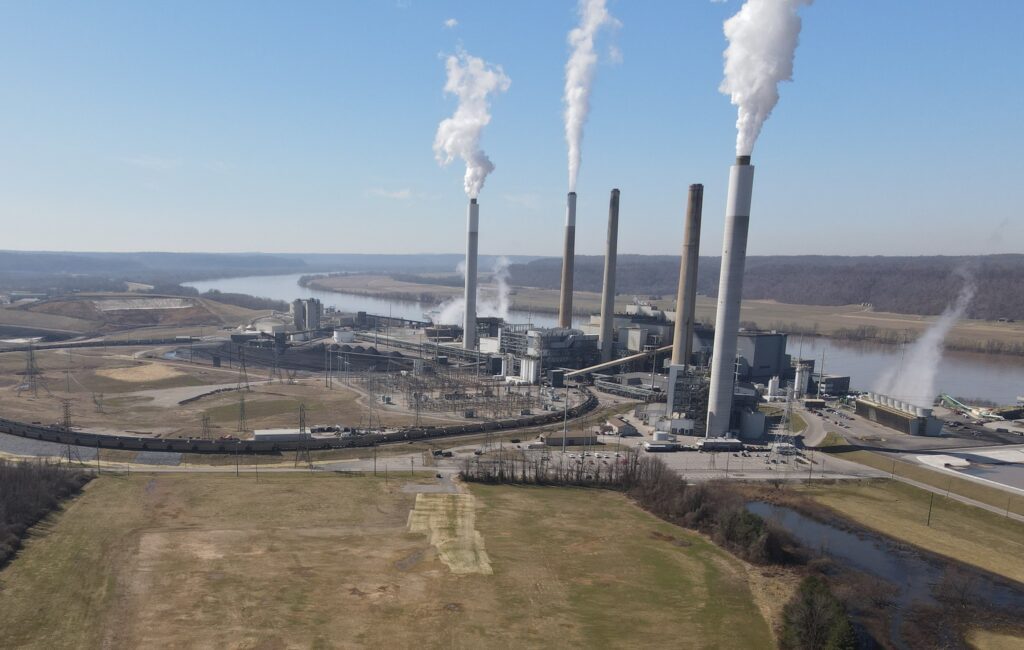
Mill Creek Generating Station in Louisville, Kentucky. Courtesy: GE Vernova
EPA Rules Could Still Impact Coal-Fired Ghent 2, Despite Good Neighbor Exemption
LG&E and KU’s existing dispatchable generation resources are approximately 7,264 MW in 2025, with coal still a majority of its portfolio. To comply with environmental requirements and energy efficiency measures, as of December 2024, the companies had retired approximately 1,500 MW of coal power since 2010. At the end of 2024, the companies retired Mill Creek 1, a 300-MW coal-fired power unit. Mill Creek 2 is slated for retirement after 2027. Retirements are also planned for two simple-cycle gas-fired plants: the 47-MW Haefling 1-2 in 2026, and 47-MW Paddy’s Run 12 in 2026.
However, in a pivotal decision in November 2023, the Kentucky Public Service Commission denied the companies’ proposed retirement of KU’s 486-MW Ghent Unit 2, citing a need for additional clarity regarding environmental compliance regulations. The KPSC had previously approved other major generation changes, including a 640-MW NGCC at Mill Creek, a 125-MW battery system, and multiple solar projects. In August 2024, the companies announced they would replace two aging coal generation units at Mill Creek—a combined 600 MW—with a 645-MW GE Vernova hydrogen-ready 7HA.03 gas turbine.
Fuel Source
LG&E (GWh)
KU (GWh)
Total (GWh)
% of Total Generation
Coal
10,046
14,276
24,322
78.6%
Gas
1,586
4,483
6,069
19.6%
Hydro
235
54
289
0.9%
Solar
8
12
20
0.06%
Total
11,875
18,825
30,700
100%
At the end of 2024, LG&E and KU had a combined owned generating capacity of 7,264 MW (LG&E: 2,466 MW, KU: 4,798 MW). The companies’ 2024 electricity generation by fuel source is reflected in the table above. Source: PPL (10-K, Feb. 2025)
KU’s Ghent 2 is part of the larger 2-GW, four-unit Ghent Generating Station, the largest coal-fired power plant in the LG&E and KU system. The plant, which began commercial operation in 1973, uses subcritical coal combustion technology, and is already equipped with electrostatic precipitators and flue gas desulfurization (FGD) systems on all units to control emissions. A $600 million FGD installation project completed in 2009 equipped all four units with scrubbers. New 662-foot chimneys were built for Units 1 and 4, including monitoring systems to measure air quality and ensure regulatory compliance.
The $152 million project to install an SCR system will ensure Ghent 2 will control its nitrogen oxide emissions and comply with the federal National Ambient Air Quality Standards (NAAQS) for ozone, the filing suggests.
As Philip Imber, director of Environmental Compliance at PPL Services, explained, Kentucky is no longer subject to the 2023 Good Neighbor Rule due to legal challenges and subsequent court rulings that invalidated the U.S. Environmental Protection Agency’s (EPA’s) disapproval of Kentucky’s State Implementation Plan (SIP). In December 2024, the U.S. Court of Appeals for the Sixth Circuit vacated the EPA’s denial of Kentucky’s SIP and remanded it to the agency, effectively blocking the application of the Good Neighbor Plan in the state. The decision has meant that Kentucky reverts to compliance under the earlier Revised Cross-State Air Pollution Rule (CSAPR) Update, rather than the more stringent requirements imposed by the 2023 Good Neighbor Plan, Imber said. However, the EPA “remains obligated to drive compliance with the 2015 Ozone NAAQS, and adding an SCR to Ghent 2 is an obvious target for such compliance efforts. Thus, adding a Ghent 2 SCR now will help ensure the ongoing year-round availability of Ghent 2, which is part of the least-cost resource plan,” he said.
Beyond the Good Neighbor Plan, the EPA’s regulatory framework includes additional rules that could affect coal-fired generation. Most notable are the Greenhouse Gas (GHG) Rule and the Effluent Limitation Guidelines (ELG). The GHG Rule, finalized in May 2024 under Clean Air Act Sections 111(b) and 111(d), imposes strict emissions limitations on coal plants, requiring them to implement carbon capture by set deadlines. However, the rule’s future is uncertain owing to legal and political opposition, including directives from the Trump administration aimed at rescinding it. “President Trump’s day-one executive orders, coupled with his campaign commitment to undo the GHG Rule, cast serious doubt on the near-term need to comply with the GHG Rule,” he said.
Likewise, the 2024 ELG Rule imposes stringent zero-discharge requirements for FGD wastewater, bottom ash transport water, and combustion residual leachate. Compliance deadlines extend to 2029, but facilities that cease coal operations by 2034 can qualify for exemptions. The rule builds on previous ELG standards but significantly tightens discharge limitations. “As with the GHG Rule, it is reasonably possible and perhaps likely that the Trump administration will seek to rescind the 2024 ELG standards. Importantly, although the EPA had the legal authority to implement the 2024 ELG standards, it was not obligated to implement revised standards,” said Imber. “Indeed, I am unaware of any reason the EPA could not rescind the 2024 ELG standards.”
Morristown High School’s Colonial Corner News features video glimpses of the 16 acts competing tonight (March 4, 2025) in Morristown Onstage, and also includes a recap of the school’s winter sports teams.
John Ulrick and Ashlyn Nielsen (English) and Elva Consuela Barrera Diaz and Marvin Mungia Mejia (Spanish) are the anchors.
Video: Colonial Corner News March 4, 2025:
Video: Noticias Colonial Corner, March 4, 2025:
This week’s news:
Health Professions Club Teddy Bear drive
Healthcare career fair
Guidance trip to National College Fair
Soph/Junior College Fair
MHS Exhibition Night
MHS Coffee House
OnStage Live show
Ilan Onigman directs these episodes. Broadcasting teacher Lance Armstrong is project advisor.
UPMC is offering free carpal tunnel screenings for individuals with wrist numbness, tingling, weakness, or pain on March 13, 2025 on the campus of UPMC West Shore at 2005 Technology Pkwy., Suite 255, Mechanicsburg, PA 17050.
Carpal tunnel syndrome occurs in one to five percent of the population and is more likely to occur in women and people between the ages of 40 and 60. When left untreated, the condition can cause a decreased quality of life due to pain and an inability to hold everyday items such as steering wheels or phones.
The event runs between 4 and 6 p.m. and will feature UPMC neurosurgeon Dr. John Braca, plastic surgeon Dr. Peter Wallick, and sports medicine specialist Dr. Mark Lavallee. Participants will learn about UPMC’s treatment options, including a new ultrasound guided, minimally invasive procedure. Registration is required.
Register for the free carpal tunnel syndrome screening event.
GE Vernova and Amazon Web Services announced the companies have signed a strategic framework agreement aimed at supporting AWS’s data center scaling. The groups on March 4 said they would collaborate to address increasing global energy demand, advance grid security and reliability, and decarbonize electric power systems.
GE Vernova as part of the deal will provide AWS with new offerings across a broad scope of solutions to electrify and decarbonize data centers across North America, Europe, and Asia. Financial terms of the agreement were not disclosed. The companies in a news release outlined the details, which include:
Electrification Systems: GE Vernova will continue to provide AWS with turnkey substation solutions to enable connectivity of AWS data centers to the grid, including expansion of major electrical equipment, project management, and construction support, across multiple sites globally. AWS and GE Vernova engineering teams will continue to work together to optimize data center substation design and delivery.
Renewables: GE Vernova will collaborate with AWS to enhance the path for commercializing onshore wind development projects.
Power Generation, Innovation and Services: GE Vernova and AWS will also explore additional opportunities for GE Vernova to provide power generation equipment and services to AWS as well as work with GE Vernova’s accelerator businesses—Advanced Research, Consulting Services, and Financial Services—to advance energy transition innovation, research, project development, and financing.
Pablo Koziner, chief commercial officer of GE Vernova said, “We are excited to work in collaboration with AWS as they advance their computing capabilities and data center capacity. We believe that GE Vernova is well positioned through its broad portfolio of energy products and services to help AWS obtain reliable, cost effective, and more sustainable electricity for its data centers in support of their growth objectives. We appreciate the opportunity to work strategically with a company that embraces innovative solutions and values strong collaboration.”
AWS will provide GE Vernova cloud services solutions to advance its cloud migration and digital innovation efforts, including through generative AI. AWS’s cutting-edge capabilities will support GE Vernova’s continued transformation as a standalone, public company as it enhances its systems and processes and further embeds sustainability and innovation into its core operations. The extended collaboration will introduce new potential technologies and cloud services, including AWS High Performance Computing.
The collaboration will also help GE Vernova accelerate development cycles and optimize operations for advanced digital technology solutions through large computational power and cloud elasticity. AWS and GE Vernova will further work together to identify opportunities to accelerate GE Vernova’s operational goals, leveraging AWS technologies in artificial intelligence, big data, and data analytics.
Additionally, AWS will continue to collaborate with GE Vernova’s Electrification Software business to help support AWS Cloud deployments of software for the electric grid, power generation, and manufacturing industries.
“Through this expanded collaboration with GE Vernova, we’ll be able to accelerate data and energy efficiencies, driving reliable and more sustainable operations,” said Howard Gefen, general manager, energy & utilities, for AWS. “Our shared goals of addressing increased global energy demand, advancing grid security, and decarbonizing electric power systems will help our customers across the globe.”
GE Vernova previously announced agreements to collaborate with AWS to help support cloud deployments of software to benefit electric utilities, energy organizations, manufacturers, and other industrial businesses. Through these collaboration arrangements, several of GE Vernova’s software solutions—including various applications within its GridOS orchestration software portfolio, as well as Asset Performance Management—are hosted in the AWS Cloud.
—POWER edited this content, which was contributed by GE Vernova’s communications team.
Every year, the Morris Educational Foundation runs the talent contest Morristown Onstage to raise funds for the Morris School District.
Every year, dozens of amateur artists audition, hoping to become one of 16 finalists chosen to compete for cash and glory at the Mayo Performing Arts Center in Morristown.
And every year, there is quite a bit of variety to the acts. Singers, duets, bands, dancers, even standup comedians. They’ve all been there before.
But there has never been a bell choir in the mix — until this evening.
When the Walsh Memorial Bell Choir of the Morris Plains Presbyterian Church takes the stage tonight, March 4, 2025, with its rendition of Toccata on King’s Weston, the ringers will have the distinction of being the first.
The 11-member choir is directed by Amy Bozza, a history teacher at Morristown High School whose previous directing experience includes years of corralling more than a hundred kids onstage for Frelinghuysen Middle School musicals. Her bell ringers range in age from 12-17, and their experience, from two to 11 years.
One of several choirs at the church, the Walsh Choir was established in 1968 and named in honor of the late Rev. Joseph E. Walsh. Membership is by audition only. The church starts kids ringing bells as young as 5, so by the time they audition for the Walsh Choir when they’re in grades 6-12, they have varying degrees of expertise.
“At first it can be a mess,” one of the kids said. “When we’re first learning a song it takes a while to get it right.”
“Timing is everything,” agreed another bell ringer. “You would think it would be harder to play a fast song and it is, but mistakes are more noticeable in a slow song. So we work hard to get it right.”
‘WE RING UNTIL WE DROP’
Ensemble members are Sarah, Henry and Kate Rossi; Emma and Charlotte Traver; Samantha and Caleb Huster; Joey and Cassie Martella; Trevor Williams, and Eli Prater.
They practice once a week and perform in church on the third Sunday of every month. The choir also performs holiday concerts throughout New Jersey, and joins other bell choirs in the Area 2 Festival, to be held in Pennsylvania in June this year.
In the summers, the ringers make extended trips, nationally and internationally. Last summer, they joined forces with their Presbyterian Church in Morristown counterparts to perform in England. This summer, they’re bound for Maine.
The group is self-funded. While local families host them when they travel, the ringers must raise money for other expenses. In addition to car washes and fruit- and cookie sales, the Walsh Choir in January held its first Ring-a-Thon.
“We will go to the church at 8 am and ring until we drop,” said Bozza. “Originally, we thought to try to beat the Guinness World Record for ensemble ringing, but there was more red tape and fees than we anticipated. Maybe next year!”
The Walsh Memorial Choir Bell Ringers. Photo by Beth Carroll
All the kids are involved in numerous other activities, bands, and sports.
“If you look at a list of all the extracurricular activities there are, it’s pretty likely that at least one of us will be in every one,” said one girl.
Their future plans are just as varied, from architecture to STEM. Eighth-grader Kate Rossi’s goal is more basic: “I’d like to be cool.”
Yet they all share one thing in common: Bells.
“They don’t all go to school together and there’s a disparity of age and experience, but they’ve become very close over the years. Trevor (Williams) has been doing this the longest – 11 years!” said Bozza.
“Excuse me?” interposed Sarah Rossi.
“Oh, sorry,” Bozza said with a laugh. “Trevor and Sarah started together!”
As the senior members of the group, those two will leave for college in the fall. But, they hastened to add, they’ll be back. Some returning members join the Walsh Memorial Bell Choir alumni. Others just want to help or fill in.
Once a bell ringer, always a bell ringer.
MORE COVERAGE OF MORRISTOWN ONSTAGE 2025
The Morris Educational Foundation presents the 18th annual Morristown Onstage on Tuesday, March 4, 2025, at the Mayo Performing Arts Center. Sixteen amateur acts from Greater Morristown will compete for $2,500 in prizes, in a benefit for the Morris School District. Tickets are $43-$95, available online or at MPAC, 100 South St., 973-539-8008.